· 7 min read · By Hotsolar engineering team
If your home electricity bill is between €60 and €150 a month, solar panels can save you roughly €450 to €1,750 a year. The upfront cost also drops considerably if you use the 40% deduction on IRPF (Spanish income tax) and your town hall's discount on IBI (the annual property tax): on a small system, the real cost can end up at less than half the price.
Why you save more in Andalucía
What matters most for your savings is how much energy each panel produces. In Seville, each kWp installed (about two modern panels) produces around 1,600 kWh a year, one of the highest figures in Europe. The same system in northern Spain or in Germany produces quite a bit less, so here every euro you invest works harder and the system pays for itself sooner.
How much you save, based on your bill
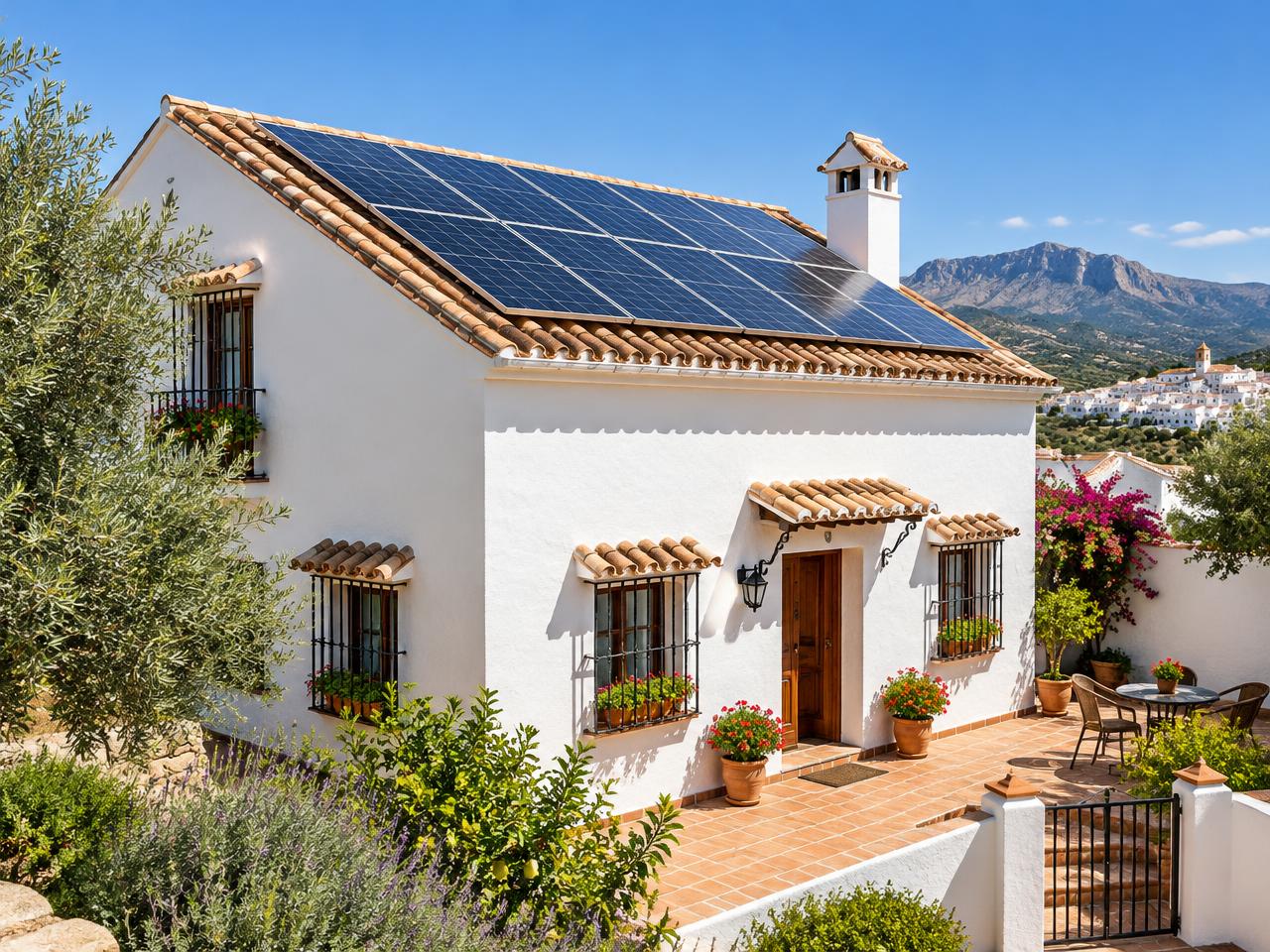
These are the estimates from our savings calculator for a home in Seville with a pitched, south-facing roof and electricity use spread through the day:
| Current bill | Recommended system | Savings per year (approx.) | Electricity spend per year |
|---|---|---|---|
| €60/month | 2 kWp | €450 to €600 | from €720 to about €220 |
| €100/month | 4 kWp + 5 kWh battery | €900 to €1,150 | from €1,200 to about €160 |
| €150/month | 6 kWp + 5 kWh battery | €1,400 to €1,750 | from €1,800 to about €210 |
Indicative estimate using satellite radiation data (PVGIS). Real savings depend on your tariff, your roof, shading and the times of day you use electricity. In the free study we fine-tune it with your bill.
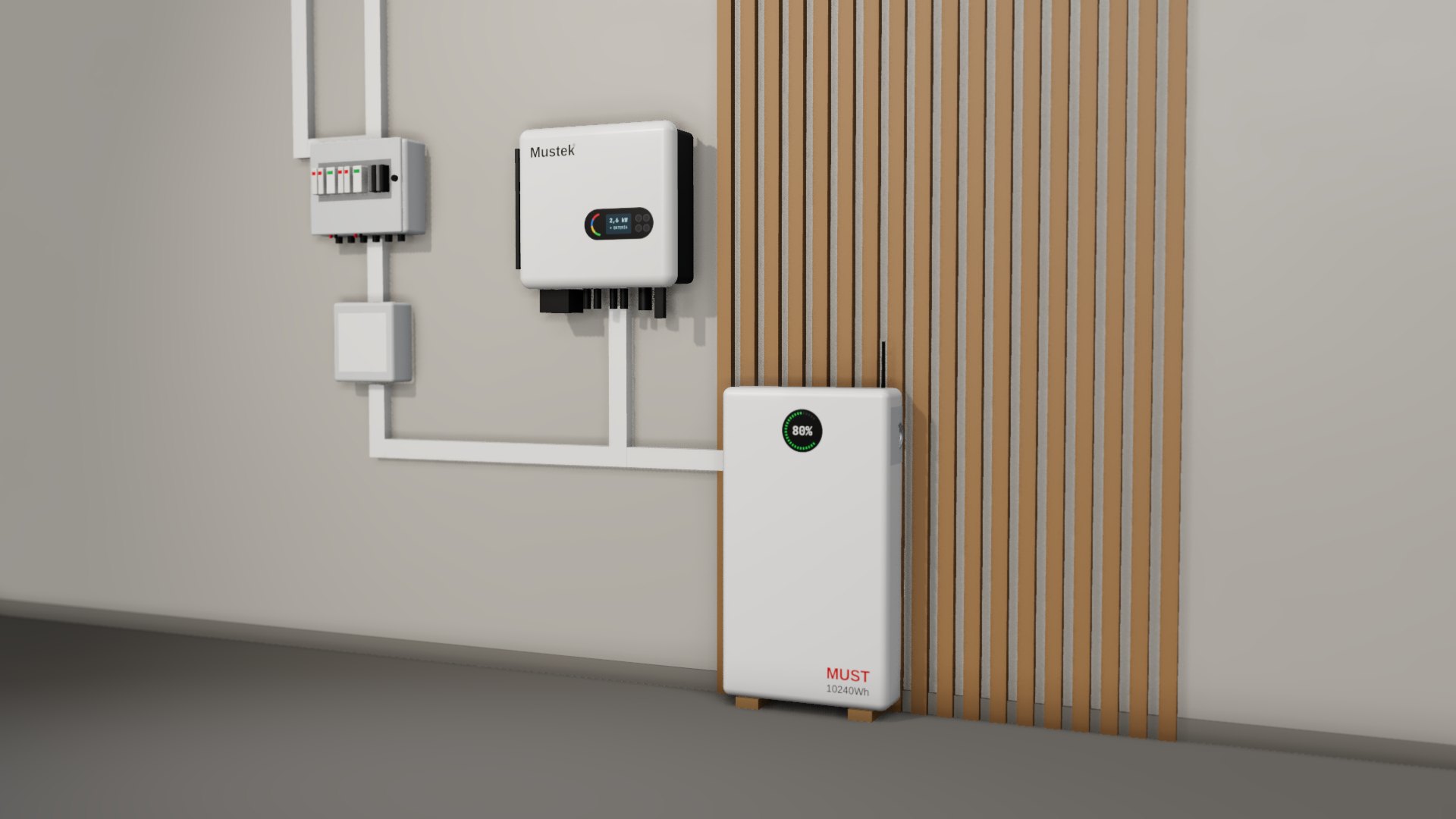
From around €100 a month, the calculator usually adds a battery, which stores the surplus from midday so you can use it in the evening and at night. If your household uses most of its electricity during the day, it usually isn't worth it. We explain this in more detail on our batteries page.
Which part of your bill goes down (and which doesn't)
Panels reduce what you pay for the energy you use, which is the biggest part of the bill: every kWh you produce and use straight away is a kWh you don't buy. The contracted power, taxes and meter rental stay the same.
That's why the bill doesn't reach zero, although it can fall by 70 to 85%. Whatever you don't use is exported to the grid and, with simplified surplus compensation, deducted from your bill each month, though at a lower price than you pay when you buy energy.
What a system costs
A home system without a battery costs around €1,300 per kWp installed, all included: panels, inverter, mounting structure, labour, legalisation and paperwork. That works out at about €2,600 for 2 kWp, €5,200 for 4 kWp and €7,800 for 6 kWp.
The battery is quoted separately depending on capacity and brand. We give you a fixed price before any work starts.
How to reduce the upfront cost
1. 40% IRPF deduction
For a home, this is the incentive that gives you the most money back in 2026. Real Decreto-ley 7/2026 (Royal Decree-law 7/2026) has extended the deductions for works that improve energy efficiency in your main home until 31 December 2026.
You can deduct 40% of what you pay on a maximum base of €7,500 a year, in other words up to €3,000. You need an energy performance certificate from before the installation and another from after, and the second must show that non-renewable primary energy use falls by at least 30% or that the home moves up to an A or B rating. Solar panels usually achieve this.
You must pay for the installation by bank transfer or card, never in cash, and if you receive any grant, it is subtracted from the base.
The Spanish tax authority has also created a new deduction for renewable self-consumption systems installed during 2026 in homes and residential buildings. In the study we tell you which one suits you best. Neither is automatic, so check your case with your accountant (gestor) or with the Agencia Tributaria (Spanish Tax Agency).
2. IBI discount
Many town halls in Andalucía reduce IBI for several years if you install solar panels. Some examples, based on their published bylaws:
| Municipality | IBI discount | Duration |
|---|---|---|
| Seville | 50% | 3 years |
| Mairena del Aljarafe | 50% | 5 to 7 years |
| Córdoba | 50% | 10 years |
| Cádiz | 50% | 4 years |
| Jaén | 50% | 4 years |
| Huelva | 50% | 3 years |
| Almería | 50% | 3 years |
| Granada | 50% | 1 year |
| Málaga | 15% | 3 years |
Bylaws change every year and usually have caps and requirements. Before counting on the discount, we check it with your town hall.
3. ICIO discount
ICIO is the tax on building works, around 4% of the budget. Málaga, Marbella, Córdoba, Cádiz and Granada, among others, discount it by up to 95% for solar installations.
4. Direct grants: be careful what you read
Direct self-consumption grants from the Next Generation funds, managed in Andalucía by the regional government (the Junta), are closed or out of funds. If anyone promises you a direct grant today, ask them for the specific programme and call for applications.
5. Financing: let the savings pay the instalment
If you'd rather not pay upfront, you can finance the installation. When the monthly instalment is equal to or less than what you save on your bill, the system pays for itself from the first month. We help you compare bank financing options; there are more details on subsidies and financing.
Full example: a house in Seville with a €60/month bill
| Item | Amount (approx.) |
|---|---|
| 2 kWp system | €2,600 |
| IRPF deduction (40%) | -€1,040 |
| IBI discount (50% of a €400 IBI, 3 years) | -€600 |
| Real cost | about €960 |
| Savings on your bill | €450 to €600 a year |
From bill savings alone, this system would pay for itself in about 5 years. Adding the deduction and the discount, in about 2. The panels carry a 25-year manufacturer's warranty.
Indicative example: your IBI, your tariff and your consumption change the result.
Frequently asked questions
Is solar worth it if my electricity bill is low? With bills of €40 or €50 a month you save less in euros, but a small system can still give a good return. The calculator tells you in a minute.
Can I claim the IRPF deduction if the house isn't my main home? The 40% deduction is for your main home or for a home rented out as someone's main home. If it's a second home, check with your accountant.
Who handles the discounts? We do. We prepare the IBI and ICIO paperwork and give you the certificates you need for the IRPF deduction.
Work out your case
Run the numbers with your bill or message us on WhatsApp and we'll prepare a free study with a fixed price.
Sources
- Agencia Tributaria: tax measures in Real Decreto-ley 7/2026 (in Spanish)
- Selectra: solar panel grants and discounts in Andalucía (in Spanish)
- Hotsolar savings calculator, using PVGIS radiation data (European Commission)