· 6 min read · By Hotsolar engineering team
If you have solar panels, you can set up your charger to fill your car's battery using only the energy you have left over, without taking a single kWh from the grid. It's called solar mode or surplus charging. Plenty of people with panels and an electric car don't have it switched on because nobody has explained it to them.
Why have a charger at home
First, the price: charging at home costs a fraction of what you pay at the petrol station, as you'll see in the table below. And the car charges while it's parked, with no hunting for charging points or waiting your turn.
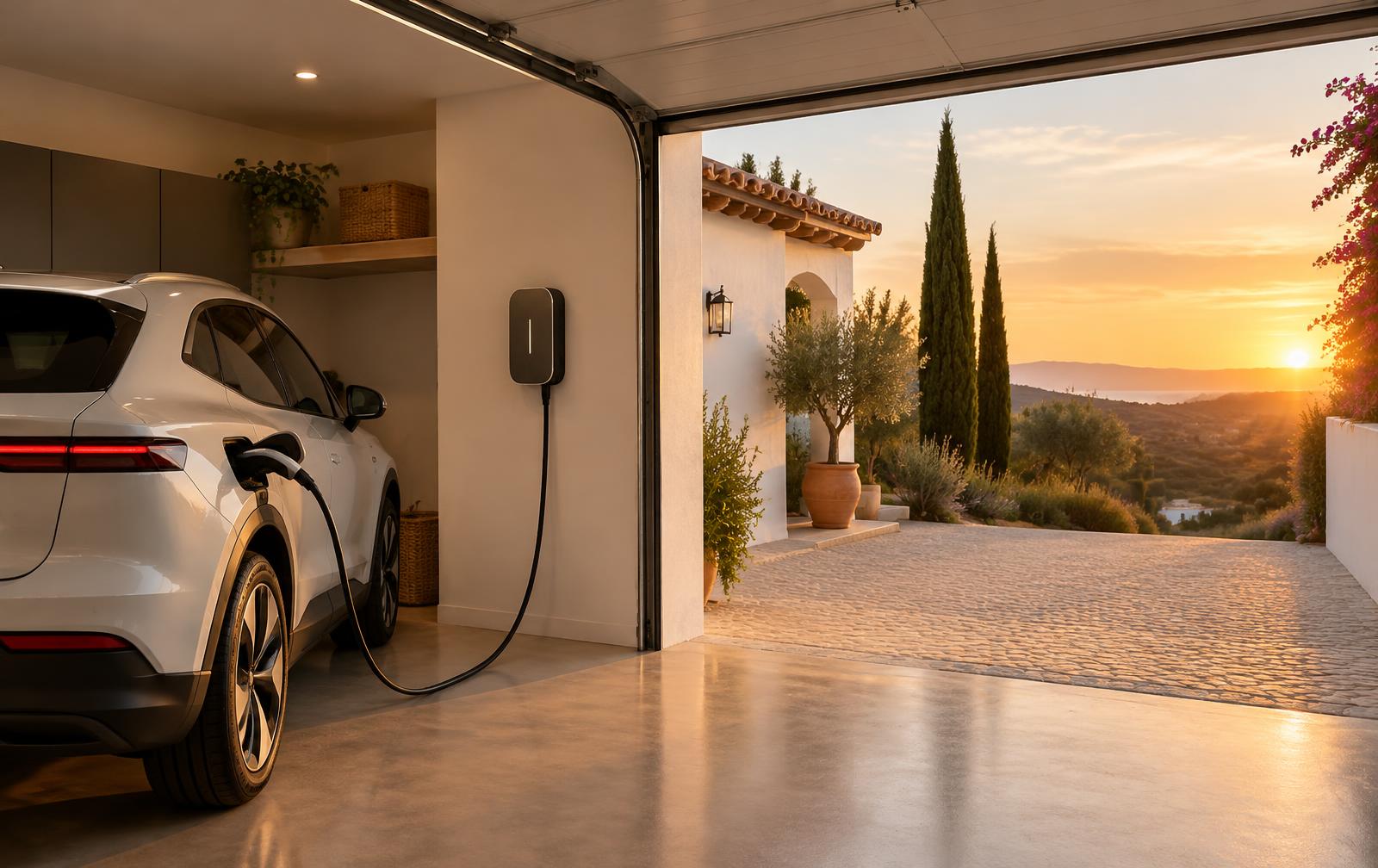
A 7 kW wall charger charges about three times faster than a household socket and has protections designed for hours of continuous use. You can schedule it for the cheapest hours, limit the power so the main switch doesn't trip and, if you have panels, charge with the sun.
If you live in a flat with a garage, you can have one too. It's installed in your parking space with a cable run from your meter, and you only need to notify the community of owners. We explain it on our EV chargers page.
What it costs to drive 100 km
Comparing an average electric car (about 15 kWh per 100 km) with a petrol car (about 6 litres per 100 km):
| How you charge | Cost per 100 km (approx.) |
|---|---|
| Petrol (6 L at ~€1.50/L) | about €9 |
| Grid electricity (~€0.15/kWh) | about €2.25 |
| Surplus from your panels | about €1 |
Approximate figures. Charging with surplus has a small cost: you would otherwise have exported those kWh to the grid in exchange for a discount on your bill, usually €0.05 to €0.08 per kWh. Even so, it's the cheapest way to run a car.
How solar mode works
To charge with the sun, the charger needs to know at every moment how much energy you have spare. It does this with a meter in your consumer unit (a clamp or a smart meter where the supply enters the house) that detects whether you are buying energy from the grid or exporting it. The charger reads that figure and adjusts its power to use only the surplus. If a cloud passes or you switch the oven on, it lowers the power or pauses, and carries on charging when there is spare energy again.
Almost all chargers with solar mode have three ways of working:
| Mode | What it does | When to use it |
|---|---|---|
| Pure solar | Charges only with surplus; if there's none, it waits | If the car is at home during the day and you're in no hurry |
| Solar + grid | Uses all the spare sun and tops up with a minimum from the grid | If you always want it to charge a bit |
| Scheduled | Charges during the cheapest grid hours | At night, when there's no sun |
The key figure: 1.4 kW
An electric car won't charge at just any power. The usual minimum is 6 amps, which in a single-phase home is about 1.4 kW. If you have less than 1.4 kW spare, in pure solar mode the car won't start charging.
In three-phase installations the minimum rises to about 4.1 kW, unless the charger can switch from three-phase to single-phase by itself. If your home is three-phase and you want to charge with the sun, look out for this when choosing a charger.
How many panels does your car need?
At 10,000 km a year, an electric car uses about 1,500 kWh. In Seville, 1 kWp of panels (two panels) produces about 1,600 kWh a year, so roughly those two panels cover what your car uses in a year.
The tricky part is timing, because the sun shines during the day and many cars spend the day away from home. Solar mode works best if you work from home or the car stays at home some days, if you do a full charge at weekends, or if you have a battery that stores the sun to charge at night.
What you need to charge with the sun
- Solar panels with enough spare capacity, or an extension to the ones you already have.
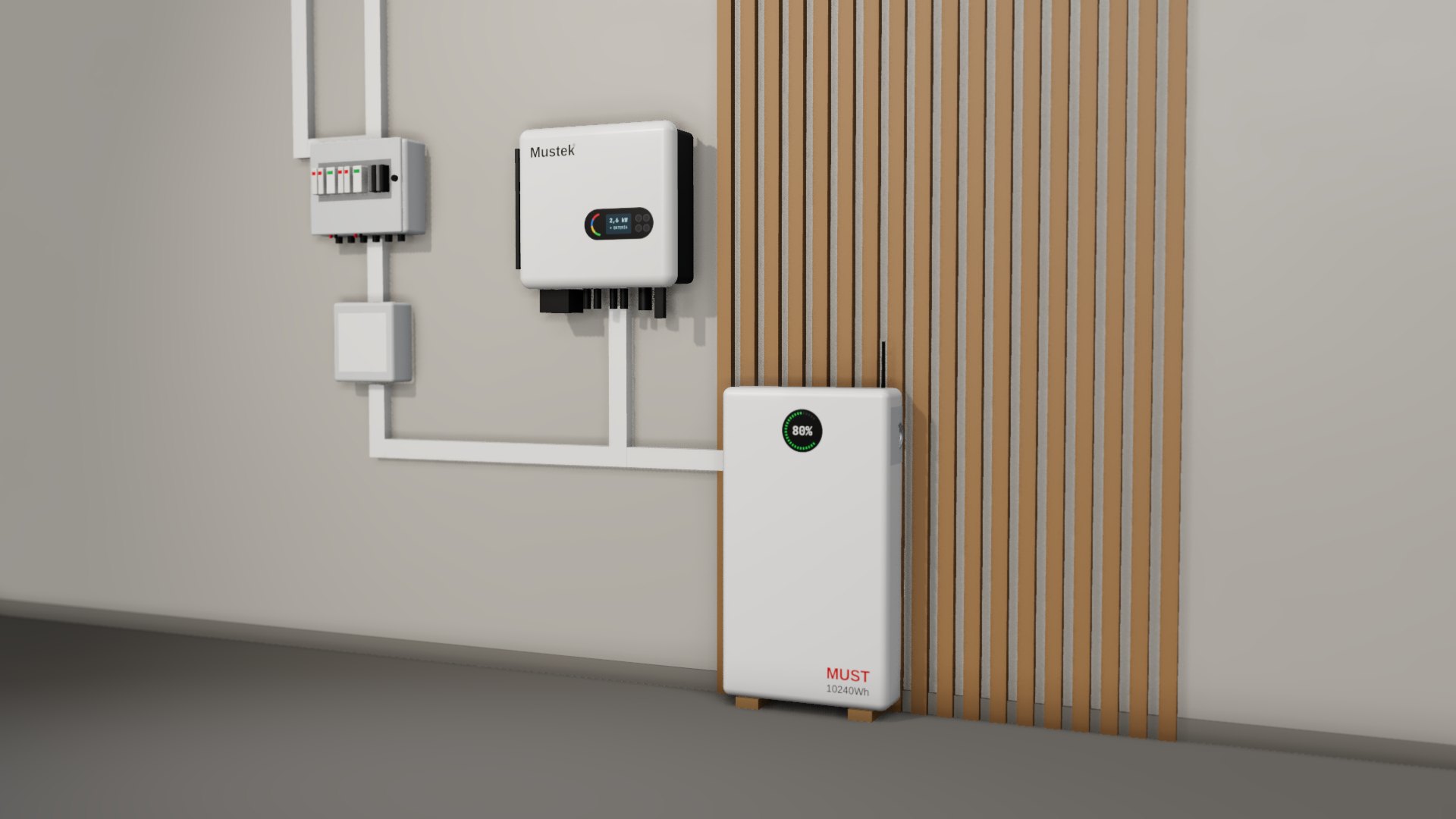
- A charger with solar mode, compatible with your inverter or with its own meter.
- A meter where the supply enters your installation.
- A cable run and protections sized for charging the car.
In a flat you can't charge with the sun from your own roof, but the community of owners can set up shared self-consumption on the roof and split the energy between neighbours. It's harder to organise, but it can be done.
If you already have panels, we check your inverter and tell you which charger fits. If you're thinking of getting them, we design the system with the car in mind from the start. More information on solar panels for homes.
Charger incentives in 2026
Real Decreto-ley 7/2026 (Royal Decree-law 7/2026) has extended the 15% deduction on IRPF (Spanish income tax) for installing a charging point until 31 December 2026. It applies to a maximum base of €4,000, so you can deduct up to €600.
The MOVES III scheme closed on 31 December 2025. The government has announced a replacement scheme, but the details haven't been set yet.
Frequently asked questions
Can I charge at night with solar energy? Only if you have a home battery. Without one, at night you charge from the grid, and the best option is to schedule the cheapest hours.
Is slow charging bad for the car's battery? No. Charging at home at moderate power is one of the gentlest things you can do for a battery.
Do I need to increase my contracted power? Not always. Chargers with dynamic load management reduce the charge when you switch on other appliances, so the main switch doesn't trip.
Request your study
We tell you which charger suits your home, your car and your panels, with a fixed price and the paperwork included. Get a charger quote or message us on WhatsApp.